

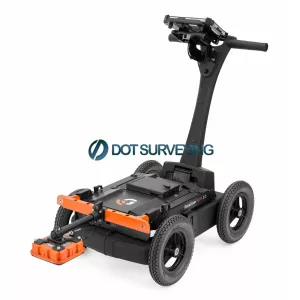
GSSI PaveScan RDM 2.0 Asphalt Density
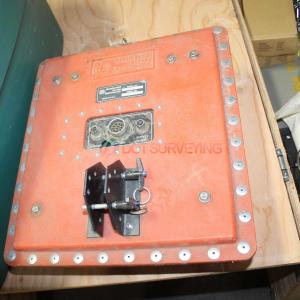
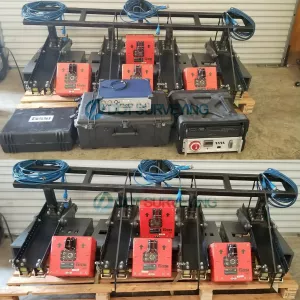

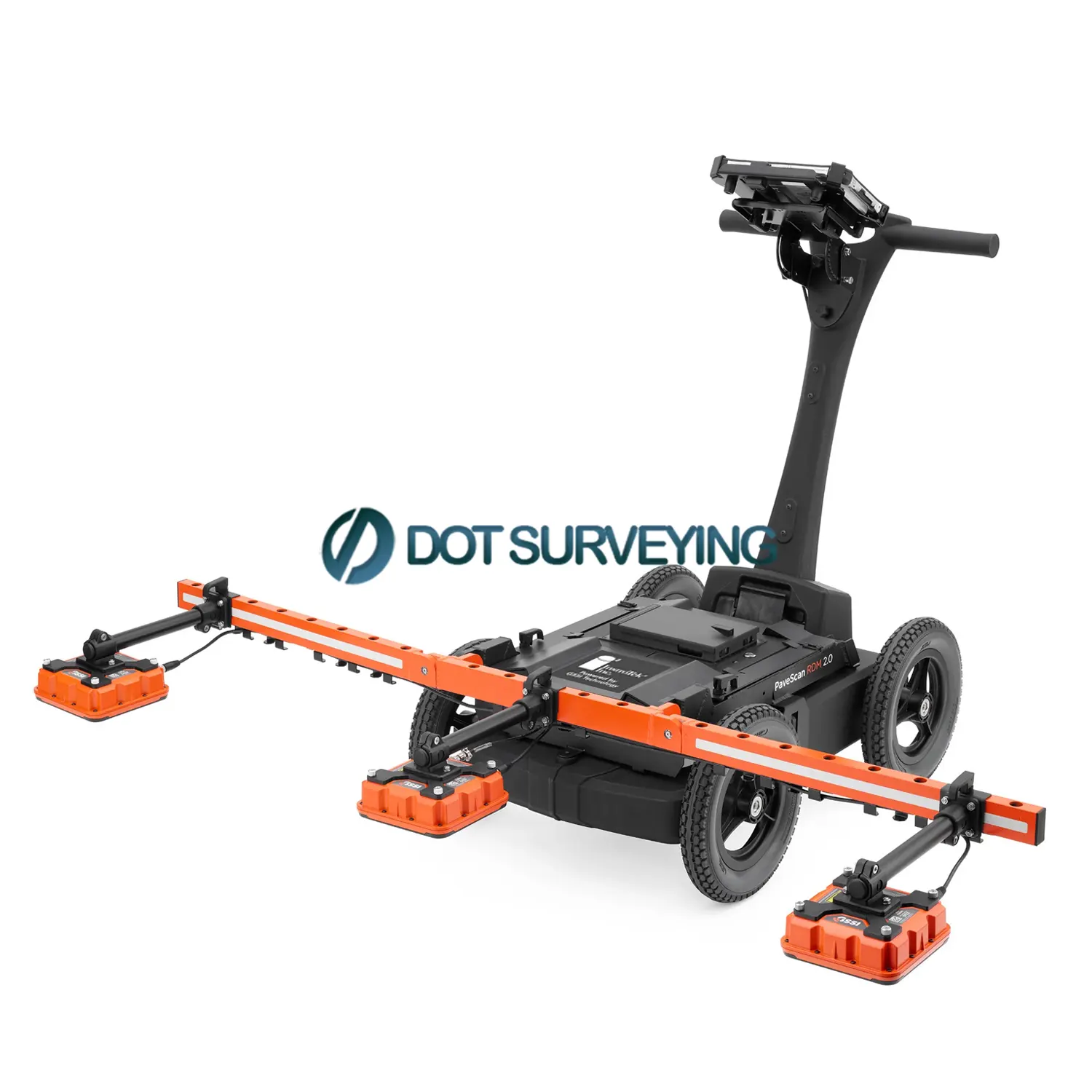
For sale GSSI PaveScan RDM 2.0 Non-destructive Asphalt Density Testing Equipment. An innovative asphalt density assessment tool that provides accurate real-time measurements to ensure pavement life and quality.
The PaveScan RDM 2.0 incorporates a new sensor design built specifically for the extremes of the asphalt paving environment, foldable deployment arms with high-visibility for work site safety and has a warm-up time of under one minute when ambient temperature is over 70° F. By detecting these problems, PaveScan RDM 2.0 helps to avoid premature failures such as road raveling, cracking and deterioration along joints. PaveScan RDM is ideal for uncovering problems that occur during the paving process, including poor uniformity and significant variations in density. By avoiding these problems, PaveScan RDM helps avoid such premature failures as road raveling, cracking, and deterioration along joints.
This system automatically measures the dielectric value to identify anomalies in real-time. In addition, the dielectric values can be used to as a means to correlate percent voids and density in new pavement. The innovative technology enables users to obtain critical density data for QA/QC of new pavements. Unlike other options, like nuclear density gauges or radioactive alternatives, PaveScan does not result in any site hazards or require closing off work areas.
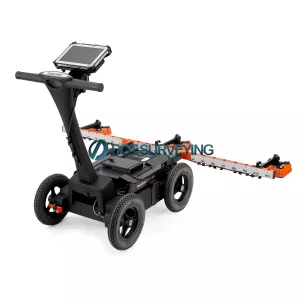
Seamlessly integrating with GPS systems, PaveScan features a flexible, modular design that facilitates easy and efficient operation and data collection. It is offered as a single sensor or a three-sensor cart based configuration.
The PaveScan RDM 2.0 is our second-generation asphalt density assessment tool that is ideal for uncovering inconsistencies that occur during the paving process, including poor uniformity and significant variations in density. By detecting these problems, PaveScan RDM 2.0 helps to avoid premature failures such as road raveling, cracking and deterioration along joints.
04/24/2019: This pavement density measurement technology is now an accepted AASHTO spec, #PP 98-19.
Max Depth: Surface Only
Sensor Frequency: 2 GHz
Weight: 36.9-42.9 kg (81.4-94.6 lbs)
Storage Capacity: 512 GB
Data Display Modes: Line Graph, Data Contour Map or Histogram Distribution
Accessories: Upgrade kit from 1 to 3 sensors, Geode GPS
The PaveScan RDM 2.0 is typically used for:
- Non-destructive asphalt compaction testing
- Quality assurance/quality control of new pavements
- Determining pavement non-conformity
System Includes
- 2 GHz Sensor (1 or 3)
- Panasonic Toughpad G2
- 4-wheel cart
- 2.1 m digital control cable(s)
- Concentrator box
- Lithium-ion battery (2)
- Dual-bay battery charger
- User Manual
- 2-year GSSI warranty
Modern technology to determine new pavement quality, The PaveScan RDM 2.0 uses the dielectric measurements of new pavement to determine pavement quality and uniformity, a world’s first.
Innovative Technology: PaveScan RDM 2.0 offers an easy and affordable assessment tool to non-destructively determine asphalt dielectric during application. This system is ideal for uncovering inconsistencies that occur during the paving process, including poor uniformity and significant variations in density.
Groundbreaking Solutions: PaveScan RDM 2.0 is the premier asphalt test method to identify areas of non-conformity in new pavement. It can be deployed with two different survey methods; utilizing the dielectric values or percent voids. There are no site hazards or need to close off work areas as is the case with nuclear gauges/radioactive alternatives.
Data Visualization: From technician to engineer, the PaveScan RDM 2.0 is easy to operate. With seamless GPS integration, real-time onscreen data output, and export options, this system is ideal for government transportation agencies and paving contractors alike.
Spesifications
| Tablet Computer | |
| Display | 10.1” WUXGA 1920 x 1200 with LED backlighting |
| Processor | Intel® Core i5-10310U vPro |
| Available Ports | Ethernet, USB, HDMI |
| Battery | Li-Ion Battery Pack (10.8 V), 4 hours |
| Operating Temperature | -28°C to 60°C (-18°F to 140°F) |
| Environmental Rating | IP65 |
| Durability | MIL-STD-810H |
| System Specifications | |
| Data Format | .csv |
| Maximum Output Resolution | .4 inch (1 cm) |
| Operating Mode | Survey wheel distance based data collection |
| Power Source | 2 x 10.8V 8.2AH batteries |
| Diagnostic | Battery indicator status, hard disk capacity |
| Measurement Specification | |
| Repeatability (Dielectric) | +/- 0.08 (value obtained from HDPE validation blocks) |
| Accuracy (Dielectric) | +/- 0.08 (value obtained from HDPE validation blocks) |
| Minimum/Maximum Dielectric | 2 to 16 |
| Mechanical | |
| Dimensions | One sensor cart system – 36.9 kg (81.4 lbs), Three sensor cart system – 42.9 kg (94.6 lbs) |
| Environmental Rating | IP65 |
| Operating Temperature | -28°C to 60°C (-18°F to 140°F) |
| Storage Temperature | -55°C to 85°C (-67°F to 185°F) |
Resources
- PaveScan RDM 2.0 Brochure
- PaveScan RDM 2.0 Manual
- Case Study: Using PaveScan Technology to Measure New Pavement Uniformity
- Article, geosciences: ”Toward Core-Free Pavement Compaction Evaluation: An Innovative Method Relating Asphalt Permittivity to Density ”
- Proceedings from ASCE Congress on Technical Advancement: ”Asphalt Pavement Compaction Assessment using Ground Penetrating Radar-Arrays”
- PaveScan RDM System Demonstration on MacKay Bridge, Halifax, NS
- Enhanced Model for Continuous Dielectric-Based Asphalt Compaction Evaluation
- Minnesota Department of Transportation Case Studies for Coreless Asphalt Pavement Compaction Assessment
- Method for Assessment of Modeling Quality for Asphalt Dielectric Constant to Density Calibration